Floating Fly Lines – Choosing a Taper for Your Method
( number of products: 40 )A floating fly line stays at the surface, but the fly used with it may float or fish below the water. It is the most versatile line category, covering dry-fly fishing, conventional nymphing, Euro nymphing, shallow streamer work, stillwater fishing and larger flies.
Do not choose by the line weight printed on the box alone. Compare the WF, DT or Level profile, head length and measured mass, front-taper design and coating temperature. The complete fly-line guide and AFTMA/AFFTA chart explain how these measurements relate to the rod.






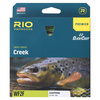


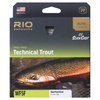


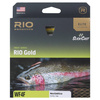
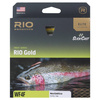







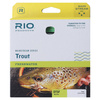
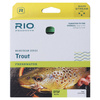
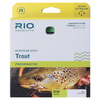
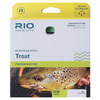
- 1
- 2
What does “floating” actually mean?
A floating coating keeps the line at the surface, making it easier to lift for the next cast, see the position of the rig and mend line on the water. It does not require the leader and fly to float. The same floating line can present a dry fly, swing a wet fly, fish a nymph on a long leader or work a streamer through shallow water.
The fly’s depth is determined by its weight and buoyancy together with leader length and diameter, current speed, casting angle and retrieve. The floating line provides a visible point of control at the surface; it does not dictate a single technique.
Which floating-line profile should you choose?
WF – the most varied family
In a Weight Forward line, the casting mass sits in a front head followed by a thinner running section. A short, powerful head loads the rod with less line outside the tip and helps turn over a bulky or weighted fly. A longer head lets the caster carry more line in the air and offers greater control when managing the loop, mending or presenting at distance.
The letters WF do not tell you whether a line is delicate or aggressive, short-headed or long-headed. Always check the head length, front and rear taper, and the manufacturer’s measured head mass.
DT – smooth turnover and line control
A Double Taper line has a long, symmetrical profile that narrows towards both ends. It is well suited to light outfits, roll casts and distances where control of the working line matters more than shooting a long running section. Many traditional DT lines can be reversed after one end wears, but first confirm that both ends of the particular model have the same construction and finish.
Level – direct control of the rig
A level line has a constant diameter and no distinct casting head. In specialist Euro-nymphing lines, this design reduces sag and supports direct control of a rig fished close to the angler, but it does not cast like a conventional WF head. Choose a Euro-nymph line primarily by diameter, core construction and suitability for the method rather than as a general-purpose casting line.
Floating lines for dry-fly fishing
For small dry flies, a profile that releases energy gradually into the leader is usually preferred. A longer, finer front taper helps the rig lose speed before it reaches the water, although delicate presentation still depends on casting technique, leader length, tippet diameter and fly size.
On a small stream, a shorter head may be useful because it loads the rod with little line beyond the tip. On larger water, a longer head gives greater control over line carried in the air. No single taper is best for every river; the relevant factors are casting distance, available space and presentation style.
Floating lines for nymphing
For conventional nymphing, an indicator rig or a team of flies, the front of the line must be able to turn over the combined weight and air resistance of the rig. Many nymph tapers place additional mass towards the front, while a contrasting tip can make the drift easier to follow. A visible tip is a reference for the angler, not a substitute for contact and leader observation.
Euro nymphing is a different application. A thin level line or specialist profile is intended to reduce sag and improve control of a rig presented close to the rod; it does not need to behave like a WF line designed for overhead casting.
Large flies, stillwaters and longer casts
A large pike fly creates far more air resistance than a small dry fly. A compact head and powerful front taper help retain the energy required to turn over the leader. The line weight must suit both the rod and the size and weight of the fly.
On stillwaters, a longer head can help the caster carry and control line in the air, while a thin running section reduces resistance when shooting. If the fly needs to remain below the surface throughout the retrieve, compare a floating WF line with an intermediate or sinking line.
Colour, coating and temperature
A colour change between the head and running section helps identify the correct overhang and shows how much line is beyond the rod tip. A contrasting tip can improve visibility, but colour itself does not determine taper or buoyancy.
Dirt increases friction and can cause the fine tip of a floating line to sit lower in the water. Clean the line periodically according to the manufacturer’s instructions and use a treatment compatible with its coating. Choose a cold-water line that stays supple in low temperatures and a tropical line that resists softening in heat.
Frequently asked questions
What is a sensible first fly line?
For general trout and grayling fishing, a floating WF line matching the rod’s rating is the usual starting point. Check whether the line is deliberately overweight and whether its head design suits the size of fly and the distances at which you normally fish.
Can a floating line be used for streamers?
Yes. It works well for streamers retrieved near the surface, fished on a short leader or worked above weed. For a deeper presentation, a sink-tip or full-sinking line may be more suitable.